In the summer, what's better than winding down from a long week with some fresh air, beautiful scenery, and live music? Only one thing: when it's all free.
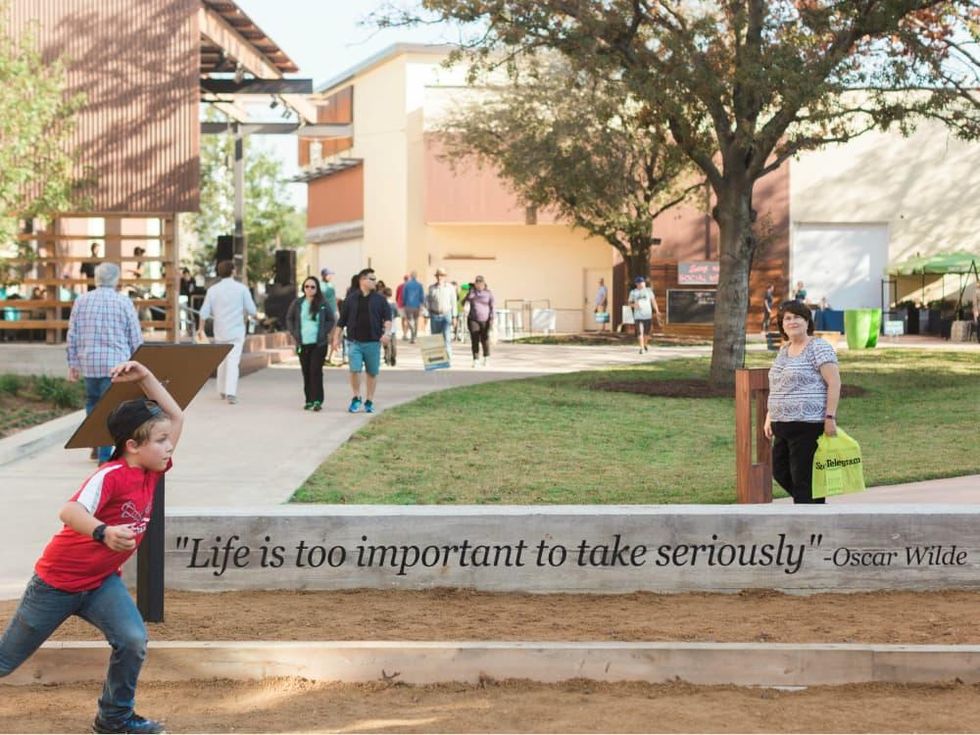
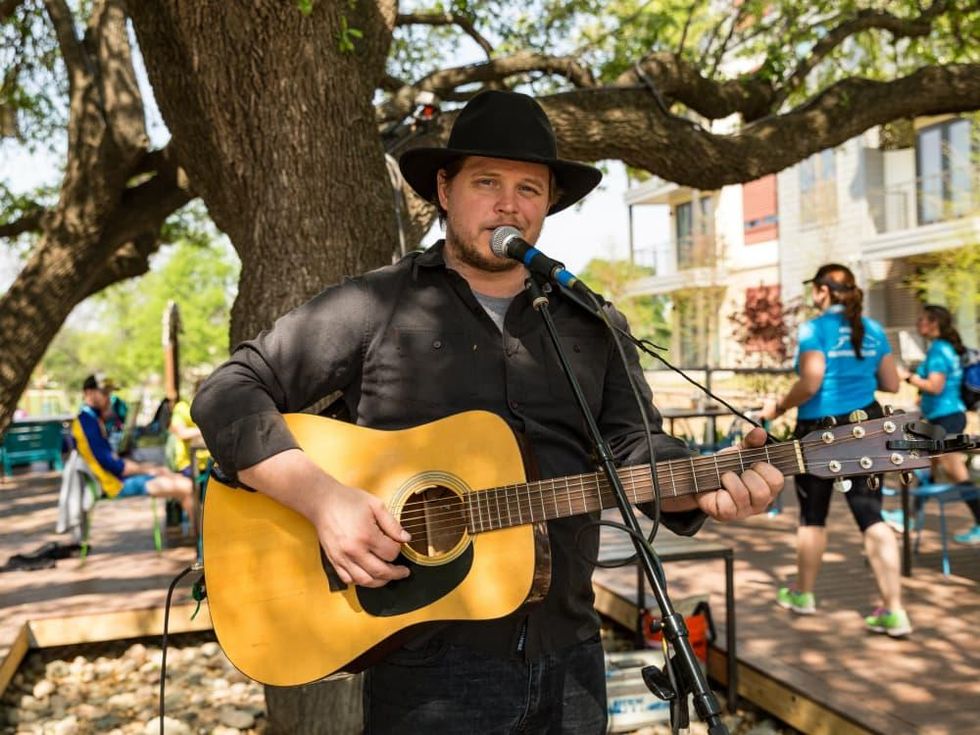
Sunset Sessions in the Grove brings a roster of local musicians to Waterside, "Fort Worth's second living room." You can catch some of the area's most talented up-and-comers from 6-8 pm every Friday in May and June, and make a night of it while you're there.
The shopping, dining, and leisure destination is built around the Grove, a park-like oasis with access to the Trinity Trails that's tucked away in the center. Lush greenery surrounds locally made furniture and planters, with bocce ball and cornhole courts at the ready for fidgety little ones (or the little at heart). Take in the public art created by Texas artist Bob “Daddy-O” Wade, and marvel at the 6,600-gallon cistern that collects water from the roof of Whole Foods Market.
There's free WiFi too, something that'll come in handy when you start sharing pics and clips of concerts. Here's who is on tap for June:
June 2: Casey Thompson
June 9: Ansley Dougherty
June 16: Morgan Lindley
June 23: Eric Webb
June 30:Zach Pack
Make a reservation for the patios at Piatello Italian Kitchen or Taco Diner, and enjoy the music while you dine or sip on a cocktail. You can also put together a meal at Whole Foods Market and stake out a spot on its patio, or take your food into the Grove for a picnic. Don't forget a bottle of wine or ice-cold six-pack.
If when June comes to a close you're already missing the music, don't worry — Sunset Sessions will be back again in the fall.
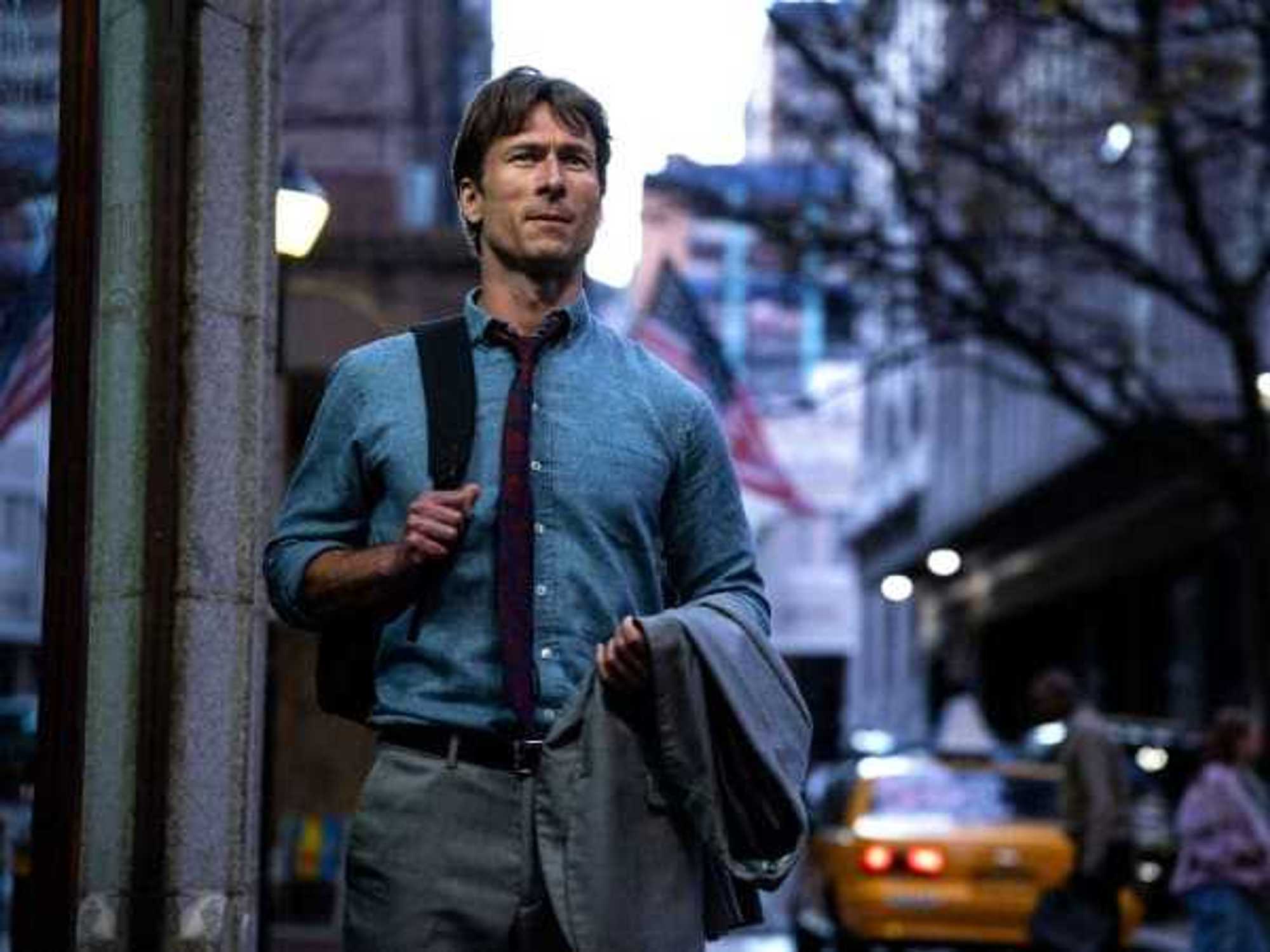
Becoming a star in Hollywood and maintaining that stardom are two very difficult things to achieve, but Glen Powell has been adept at doing so over the past few years. A key supporting role in Top Gun: Maverick led to lead parts in films like Hit Man, Anyone But You, Twisters, and The Running Man. Powell is looking to keep his star power shining in the new dark comedy/thriller, How to Make a Killing.
He plays Beckett, an outcast member of the ultra-wealthy Redfellow clan. Struggling to get by in a menial job in New York City while still living in New Jersey, Beckett’s only smidgen of hope is that he remains an heir to the vast Redfellow fortune. The only trick? Every other remaining family member must die before he’ll see a dime of that money. When even that menial job goes away, Beckett indulges the fantasy of bumping off his familial competition.
Among those standing in his way are cousins Taylor (Raff Law), a finance bro, Noah (Zach Woods), a pretentious artist, and Steven (Topher Grace), a celebrity pastor; Uncle Warren (Bill Camp) and Aunt Cassandra (Bianca Amato); and grandfather Whitelaw (Ed Harris). Complicating matters, however, are an old childhood friend, Julia (Margaret Qualley), who starts asking more of Beckett than he can give; and new flame Ruth (Jessica Henwick), who happens to be dating Noah when he meets her.
Written and directed by John Patton Ford (Emily the Criminal), the film is a tale of two halves. Narrated by Beckett in the form of telling his story to a prison chaplain, the story plays with audience expectations on multiple occasions. As Beckett ramps up to detailing exactly how he got started down the road toward being a serial killer, the film has a fun-if-macabre vibe.
Under normal circumstances Beckett would be someone to despise, but since he’s an underprivileged person who’s taking aim at people who (mostly) don’t seem to appreciate their good luck, it feels okay to cheer for him. This follows a recent trend in “eat the rich” films, one that’s been influenced by a turn against real-life billionaires. Ford plays heavily into the theme and it works for a good portion of the film.
However, things get a little murky in the second half of the movie. A few of the planned killings get less attention than others, making their - pardon the pun - execution less interesting/fun than the others. Also, Ford does a poor job of indicating just how much weight should be put on Beckett’s relationship with Julia, someone with whom he only has occasional interactions for the bulk of the film.
It’s difficult to know the exact right way to showcase Powell, but this film doesn’t seem to be the best fit. Whether it’s the odd hairstyle/wig he’s given, or the varying degrees of confidence his character shows, his performance is up and down. Qualley’s acting style is over-the-top, and she needed to dial it down in this particular role. Henwick and Camp are the grounding forces in the film, keeping the story somewhat tethered to reality while almost everyone else makes a meal of their scenes.
How to Make a Killing is serviceable entertainment that gives viewers a decent number of laughs and thrills. But Ford can’t find a way to make the story work all the way through, and a so-so performance by Powell keeps the film from rising above its mediocre station.