
Up and away
Futuristic air taxis are now on the horizon in Dallas-Fort Worth
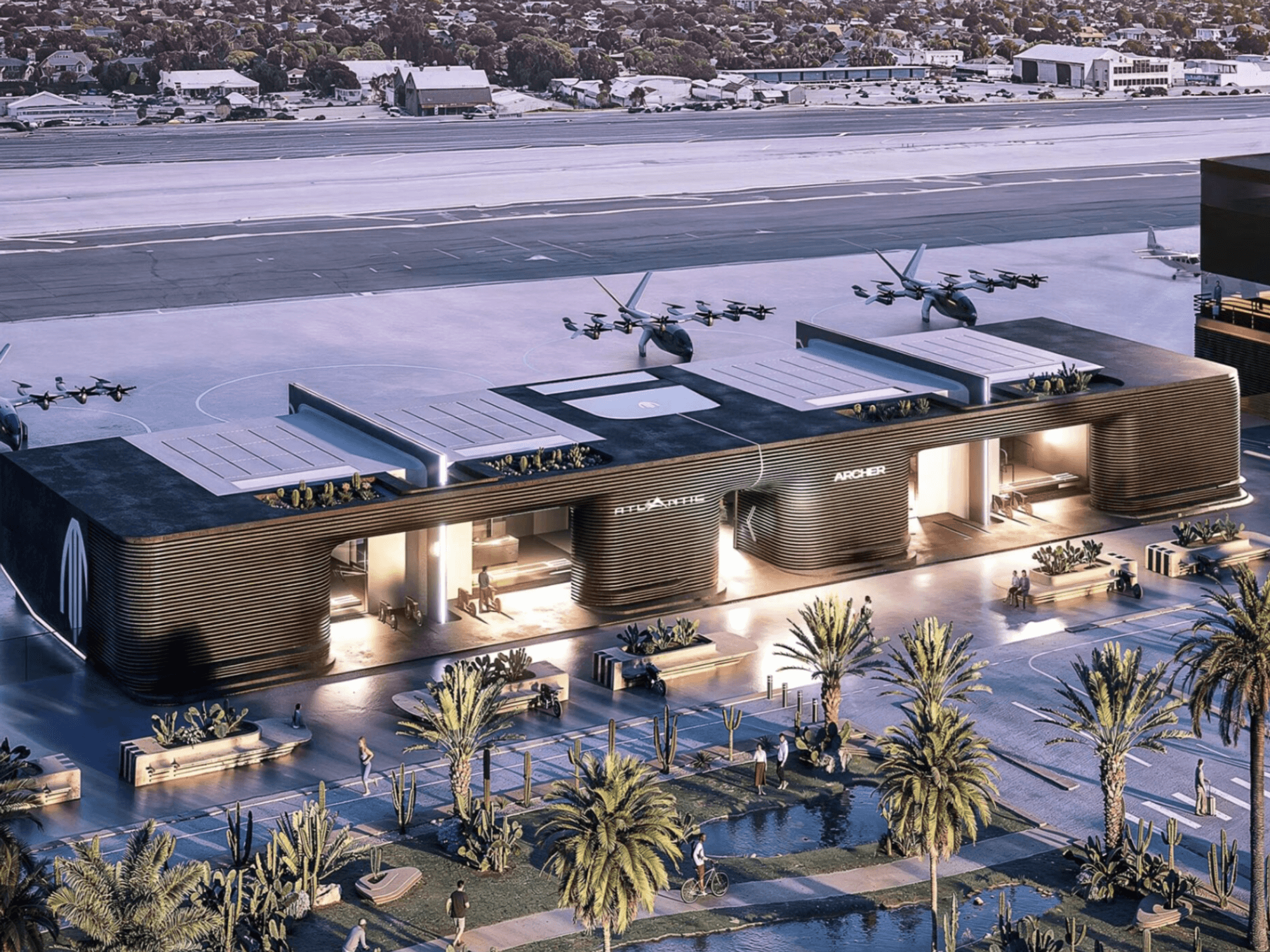
This rendering shows what an air taxi VertiPort might look like.
Futuristic air taxis may soon join drones in the skies over North Texas.
The North Texas Council of Governments, a regional planning organization, is seeking permission from the Federal Aviation Administration (FAA) to run a pilot project for testing unpiloted electric-powered aircraft that take off and land vertically. The council filed its application on Wednesday, January 21.
Members of the council are counties, cities, school districts, and other government organizations in a 16-county region anchored by Dallas-Fort Worth.
Among the airports that would be partners in the pilot project are Dallas Fort Worth International Airport, Arlington Municipal Airport, Perot Field Fort Worth Alliance Airport, and Fort Worth Meacham International Airport.
Roger Venables, Fort Worth’s aviation director, says he foresees regular air taxi service becoming a reality within the next five years. At Meacham, for instance, air taxis could shuttle passengers to and from Dallas Fort Worth International Airport and Dallas Love Field.
Meacham and Spinks serve private aircraft, such as business jets, while Perot Field serves cargo aircraft.
“We’re looking to embrace the next evolution of air transportation, particularly within an urban environment,” Venables says of vertical takeoff and landing aircraft. “Our airports experience relatively low congestion compared to commercial airports, positioning them well as early adopters for pilot programs and demonstration activities.”
DFW International Airport and Arlington’s airport are also exploring air taxi service.
In 2023, the airports started collaborating with air taxi company Overair to one day launch service. The following year, Arlington Mayor Jim Ross said he expected air taxis to ferry passengers to the city’s Entertainment District in time for this year’s World Cup soccer matches. But that won’t happen, as the FAA still hasn’t authorized transporting passengers to fly on air taxis.
City of Arlington spokeswoman Susan Schrock says the city plans to demonstrate vertical takeoff and landing aircraft at an event around the time of this summer’s World Cup. However, the aircraft will carry goods, not people, Schrock says.
The North Texas Council of Governments’ proposed three-year pilot project would operate short-range passenger shuttles and short-haul cargo aircraft. Initially, the airplane-helicopter hybrids would fly along two routes.
One of the pilot project’s key partners would be Plano-based VertiPorts by Atlantic, which develops takeoff and landing sites for these airplane-helicopter hybrids. VertiPorts is targeting markets such as New York City, Los Angeles, the San Francisco Bay Area, and Miami for development of its sites.
VertiPorts by Atlantic seeks to “reimagine urban connectivity,” CEO Kevin Cox says.
“This initiative represents not only a key investment in sustainable transportation but also an opportunity to provide faster, cleaner, and more efficient mobility options in some of the country’s busiest cities,” says Cox.
The pilot project’s other participants would include:
- Texas A&M University’s Center for Advanced Aviation Technologies, which opened last year in Fort Worth
- Southern Methodist University
- University of Texas at Arlington
- University of North Texas
- Boeing-owned Wisk Aero, which plans to launch air taxi service in the Houston area by 2030
- Air taxi manufacturers Archer Aviation and Joby Aviation
- Beta Technologies, a manufacturer of self-flying vertical takeoff and landing aircraft
Funding for the North Texas project would come from its participants.
Last September, the FAA announced its pilot program for piloted and unpiloted electric-powered aircraft that take off and land vertically instead of horizontally (as traditional aircraft do). The program will comprise at least five pilot projects around the country.
“The next great technological revolution in aviation is here. The United States will lead the way, and doing so will cement America’s status as a global leader in transportation innovation,” U.S. Transportation Secretary Sean Duffy said in announcing the program.

 Jamaica Beach earned a 9.20 "local secret" score. Getty Images